Find the Right Location
5 steps to securing a placement
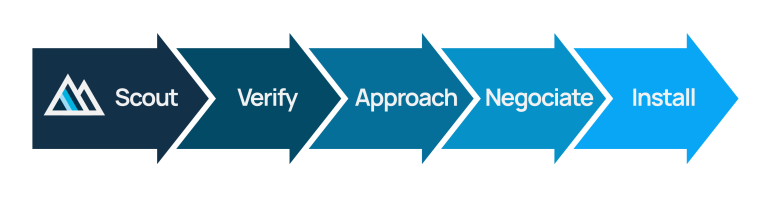
Start with a 3–5 mile radius around where you live or work. Look for high foot traffic, adequate interior space near the entrance or a service area, and visible proximity to where people already buy bottled water. Drive-by traffic counts matter less than repeat visit frequency — a smaller laundromat where people come 3x per week outperforms a busy gas station with low dwell time.
Target 10–15 candidates before you start approaching anyone. Having options gives you negotiating leverage and helps you spot patterns in what works.
Before you pitch the business owner, verify the space can support installation. You need: a ½” water inlet line within reasonable distance, a ½” drain connection, and a 220V single-phase outlet. Most commercial spaces already have these — but confirming early saves everyone time. The machine occupies just 5.6 sq ft, so space is rarely the issue.
Take photos of the potential placement area, the water line access point, and the electrical panel. Your installer will want to see these before confirming feasibility.
Ask for the owner or manager — not the floor staff. Come prepared with two things: a short explanation of how the machine works (no cost to them, no staff required, adds a service their customers want) and a rough number of what other operators in similar locations earn. Keep the first conversation brief. Your goal is to get a second meeting, not close a deal on the spot.
Lead with what’s in it for them: “I’d like to install a water vending machine here at no cost to you. You’d get a service your customers use daily, and we can work out a revenue share.” Most owners say yes to a second conversation when it’s framed that way.
A standard placement agreement covers: term length (typically 1–2 years with renewal options), revenue split or flat monthly fee to the host, access rights for maintenance visits, and what happens if either party wants to exit early. Most hosts in smaller locations accept a flat monthly fee of $75–$150 rather than a revenue percentage — it’s simpler for everyone.
Get everything in writing even for informal arrangements. A simple one-page agreement protects both parties and signals that you operate professionally. We provide a template agreement through our consulting service.
Once the agreement is signed, coordinate with a licensed plumber for the water and drain hookup — typically a 2–4 hour job. The machine arrives pre-configured and just needs to be connected. You’ll set pricing based on local market conditions: check what nearby stores charge for bottled water and price your gallons at roughly 40–60% of that equivalent cost. Then configure your cashless payment system and activate remote telemetry.
A first-week walk-through with the location owner helps them answer basic customer questions (“How does it work? Is the water safe?”) and builds goodwill that makes the long-term relationship easier.
Do's and Don'ts when
pitching a location owner
Our consulting service covers the full location process.
Configure your location scenario
Estimates based on real operator averages. Operating costs assume ~$80/mo water and power and ~$25/mo average filter maintenance. Location fees and installation costs not included. Results will vary by location quality and management.
Estimate your revenue
- revenues vary from location to location depending on demographics, foot traffic and other factors.
OPPORTUNITY
ABOUT US
EQUIPMENT
SUPPORT
SUBSCRIBE NOW